
Unique Bansko – Between Flavours, Thermal Springs and Mountains
"In winter, skiers come. In summer, everyone else does," the people of Bansko proudly say, and they have every reason to be proud. Nestled at the foot of the Pirin Mountains, this picturesque Bulgarian town first gained recognition as one of the country's premier ski resorts. Today, thanks to its rich variety of attractions and activities, it has also become a favourite summer destination.
Throughout the year, visitors are drawn to its charming stone-paved streets, authentic mehanas (traditional Bulgarian taverns) where local recipes have been preserved for centuries, hotels with outstanding spa facilities fed by natural thermal mineral waters, and the pristine wilderness of Pirin National Park.
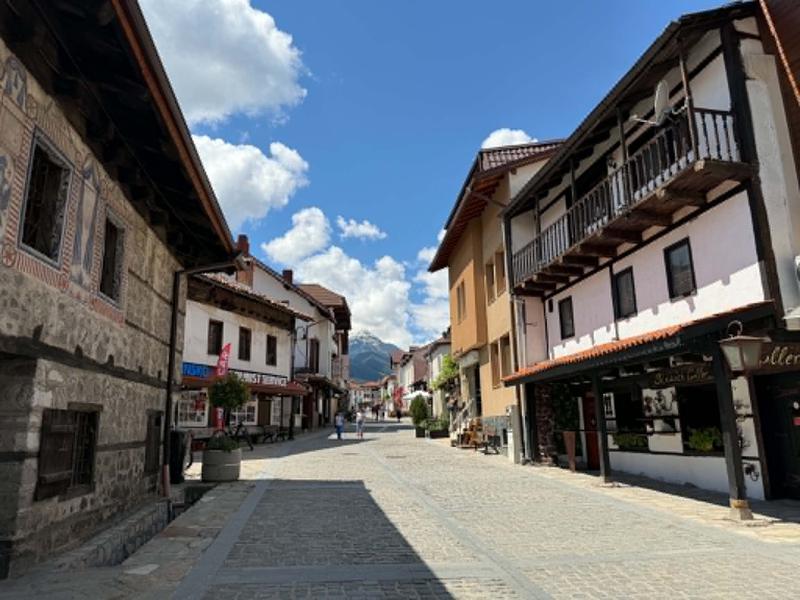
From Bansko, the view first embraces the green mountain slopes surrounding the town before rising towards majestic peaks that remain snow-capped even in summer.
A stroll through the historic centre leads along cobbled streets lined with stone houses featuring wooden balconies and wide eaves, centuries-old churches, traditional craft workshops and lively mehanas.
The Best Way to Discover Bansko Is Around the Table
In order to preserve their centuries-old culinary and cultural heritage, local restaurateurs and tourism professionals created the Unique Bansko project. Today, only twelve mehanas proudly carry this prestigious label.
To become a member, a mehana must meet strict criteria. It has to be owned by people born in Bansko, often continuing a family tradition passed down through generations. Ingredients must be locally sourced, recipes authentic, while the interior reflects the region's heritage through stone and wood architecture, an open fireplace as the heart of the restaurant, and staff uniforms inspired by traditional Bulgarian folk costumes. Evenings are accompanied by live Bulgarian folk music, while many signature dishes spend hours slowly simmering in traditional clay pots or are grilled over an open wood fire.
Whenever you see the Unique Bansko sign at the entrance, you know you are not simply entering another restaurant, but stepping into a place where history, flavours and hospitality come together in a truly authentic Bansko experience.
One ingredient sets Bansko's cuisine apart from the rest: chubar (mountain savory), an aromatic herb that enjoys almost legendary status in the region. Covering the slopes of the Pirin Mountains during summer, it gives local dishes their distinctive aroma. Its rich flavour recalls a blend of wild oregano, thyme and black pepper with a subtle hint of menthol. Besides its unique taste, locals believe it also makes the region's hearty cuisine easier to digest.
In these atmospheric mehanas, surrounded by details reflecting local history, meals usually begin with fresh salads combining tomatoes and cucumbers with traditional Bulgarian white sheep's or cow's cheese. Roasted peppers and tomatoes baked with cheese are another classic, while baked cheese with figs or with crushed hazelnuts or walnuts drizzled with honey is equally irresistible. They are accompanied by traditional spreads prepared from roasted peppers, aubergines and fresh cheese flavoured with herbs from the Pirin Mountains.
The main courses continue the story. Various grilled meat specialties are prepared over the open fireplace, often served together on generous platters. Slow-cooked dishes follow, served in traditional clay pots: Chomlek, tender veal or pork cooked with potatoes, red wine and spices including chubar; Kosturela, beans with sauerkraut and pork ribs; pork knuckle with potatoes seasoned with mountain dill; and a variety of rich traditional stews. Desserts are simple yet delicious, featuring homemade jams, yoghurt, honey and wild forest berries.
During our four-day stay, we had the opportunity to visit several mehanas. Each of them was unmistakably Bansko, yet every one had its own personality, family recipes, stories and welcoming hosts.
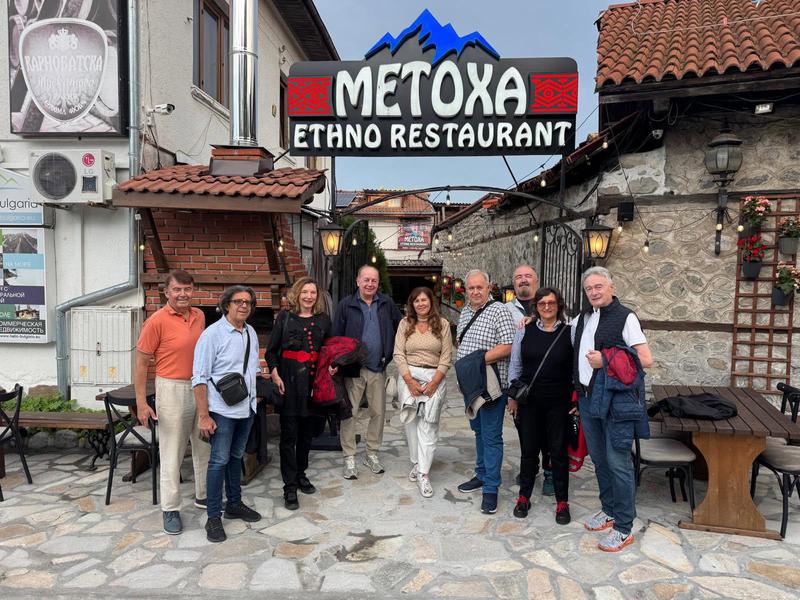
Our first encounter with the atmosphere and flavours of Bansko took place at Mehana Metoha, located in the very heart of the Old Town, on the square named after the poet Nikola Vaptsarov. Passing through its stone archway, you enter a courtyard enclosed by stone walls before stepping into a cosy interior decorated with old photographs and bottles that tell stories of the past. The Unique Bansko plaque occupies a place of honour.
The opening meze included baked cheese with figs and honey, as well as roasted peppers and tomatoes topped with cheese.
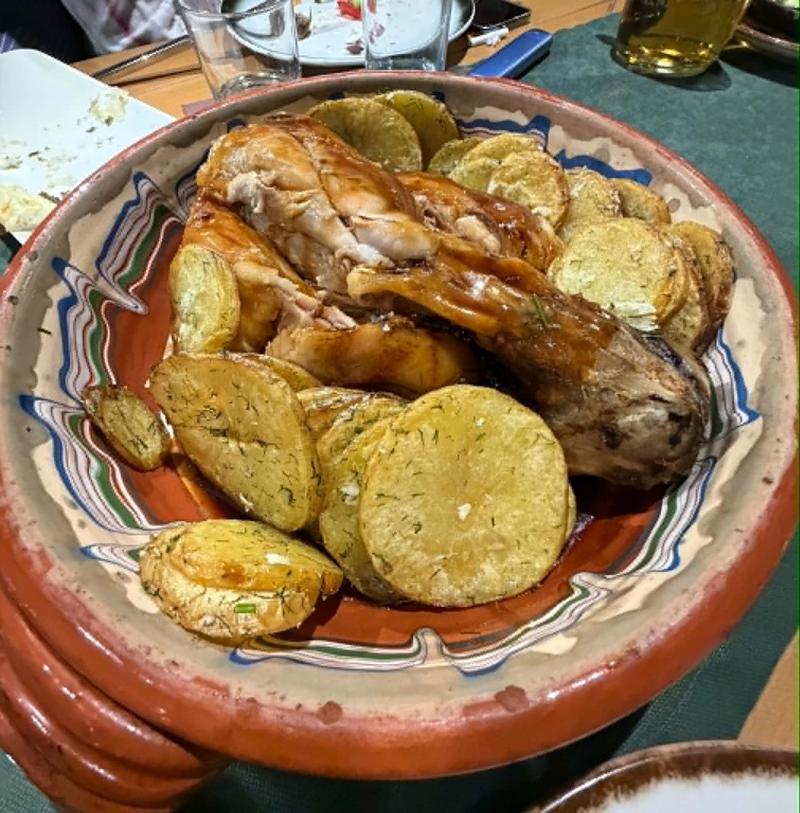
Alongside a selection of grilled meats, large clay pots revealed slow-cooked pork knuckles with potatoes and aromatic herbs from the Bansko region. The house red wine was so exceptional that we never even felt tempted to try another label.
Across the same square stands Mehana Chevermeto, where a whole lamb slowly turns on the spit outside the entrance.
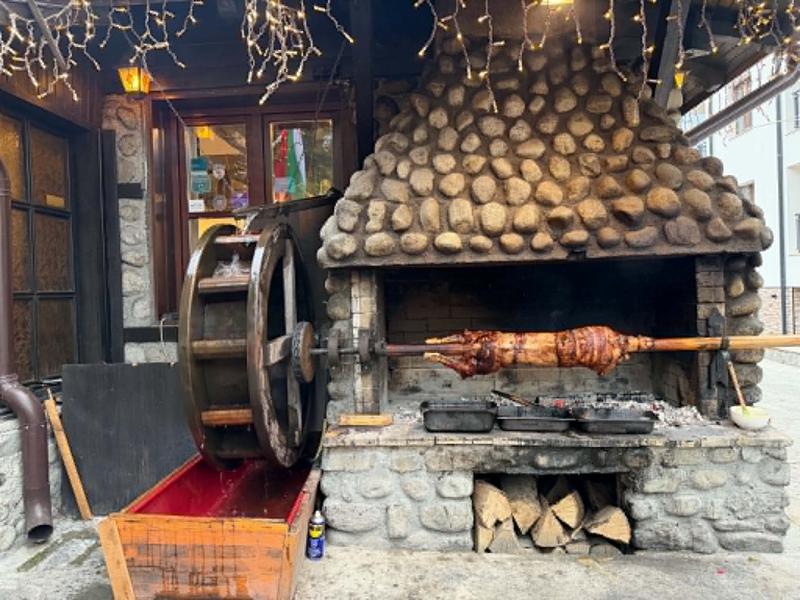 Inside, colourful ethnographic decorations fill every corner, while strings of onions and garlic hang from the heavy wooden beams. At the heart of the restaurant burns a large open fireplace around which many of the dishes are prepared.
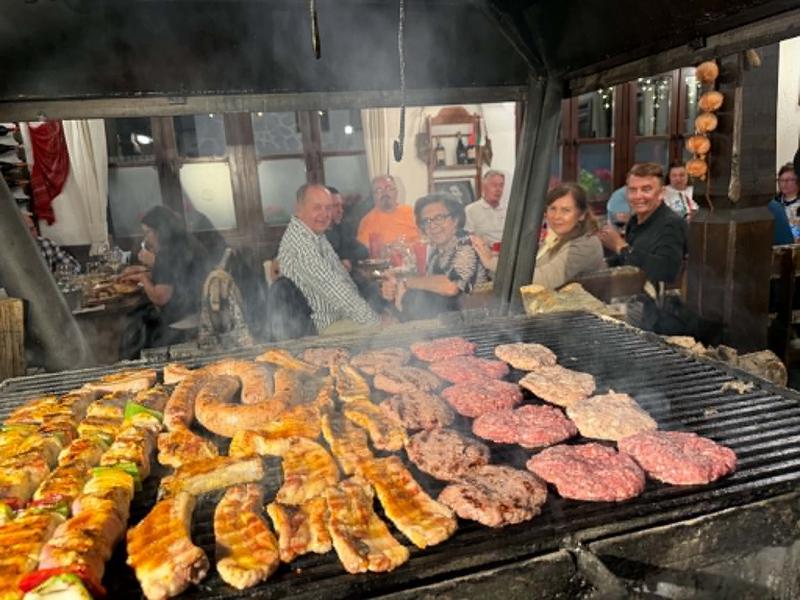
Here too, the meal unfolds gradually. It begins with a rich selection of meze, cheese spreads, roasted peppers and tomatoes stuffed with traditional Bulgarian white cheese, warm cheese breads and baked cheese with walnuts and mushrooms.
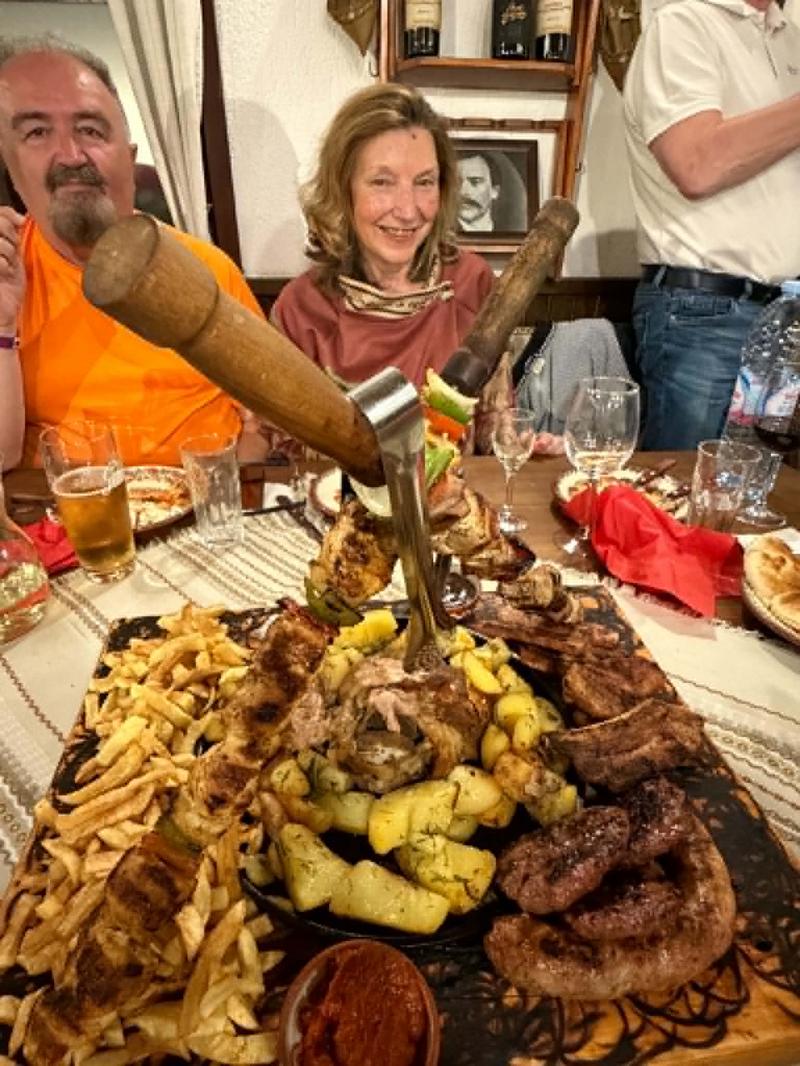 The focus then shifts to the grill, where meat specialties are prepared over the open fire before being arranged into an impressive meat pyramid.
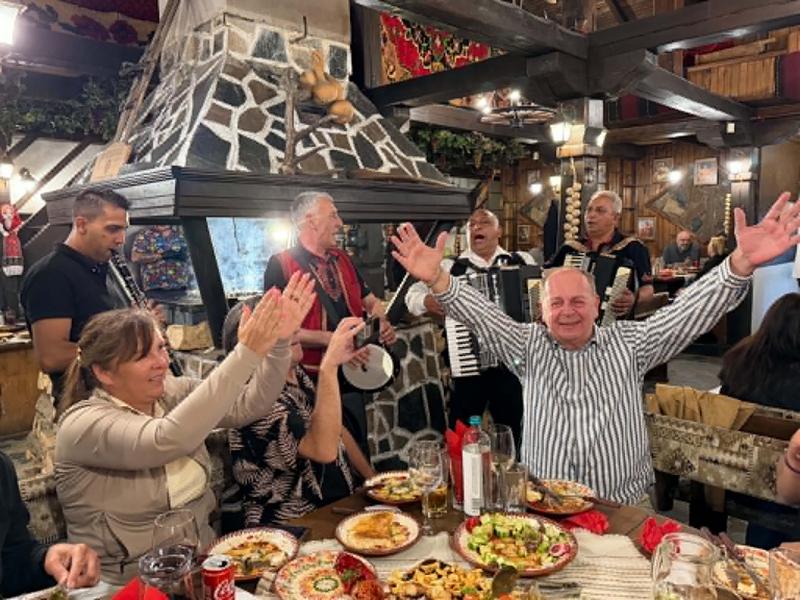 Accompanied by live Bulgarian folk music, the aroma of burning wood and the warmth of the fireplace, time simply seems to disappear.
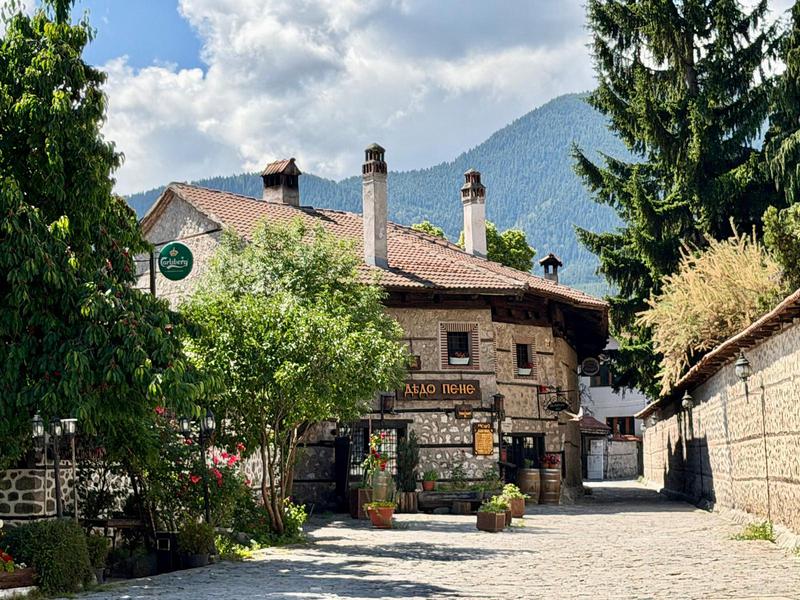
A short walk away, close to the Holy Trinity Church, stands Mehana Dedo Pene, housed in an authentic stone building that has welcomed guests continuously since 1820. Once an inn for merchants and travellers, today it is one of Bansko's best-known symbols of hospitality and a true guardian of the region's culinary heritage.
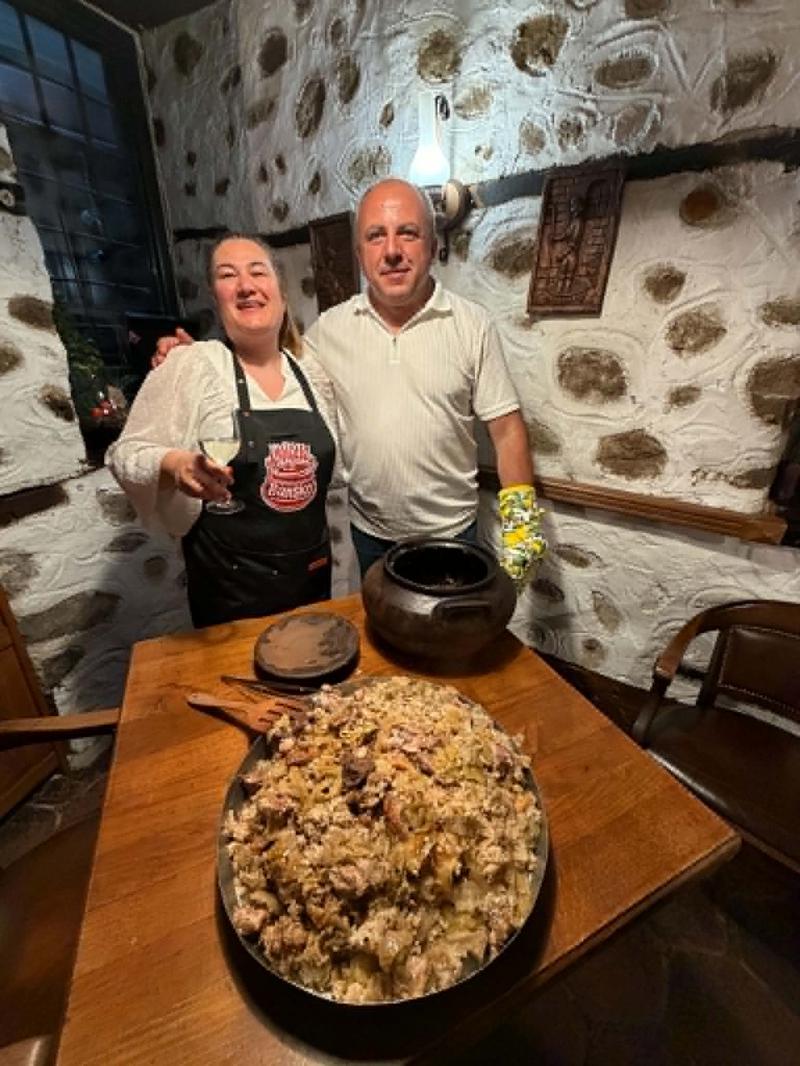 Its owners, Yulia and Boris Popov, are among the founders of Unique Bansko, and every dish served from their kitchen is accompanied by a story about the region, a family tradition or a local custom. Dining here becomes a delicious journey through history.
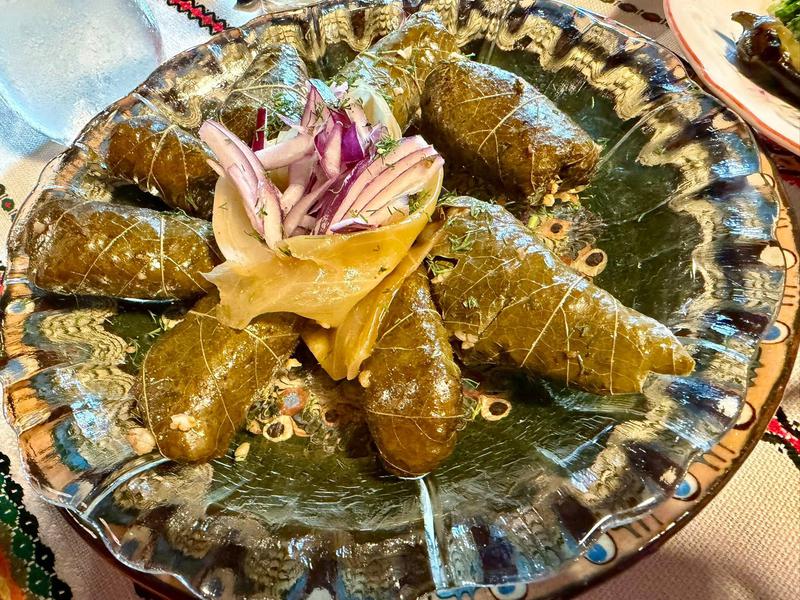 Alongside specialties such as vine leaf rolls, fluffy eggs with porcini mushrooms, roasted peppers, veal tongue, liver, tripe and baked Bulgarian white cheese with honey and hazelnuts, they proudly introduced us to Kapama, the signature dish of Bansko cuisine. Prepared from several types of meat, cabbage, rice, spices and wine, it is slowly cooked for as long as seven hours.
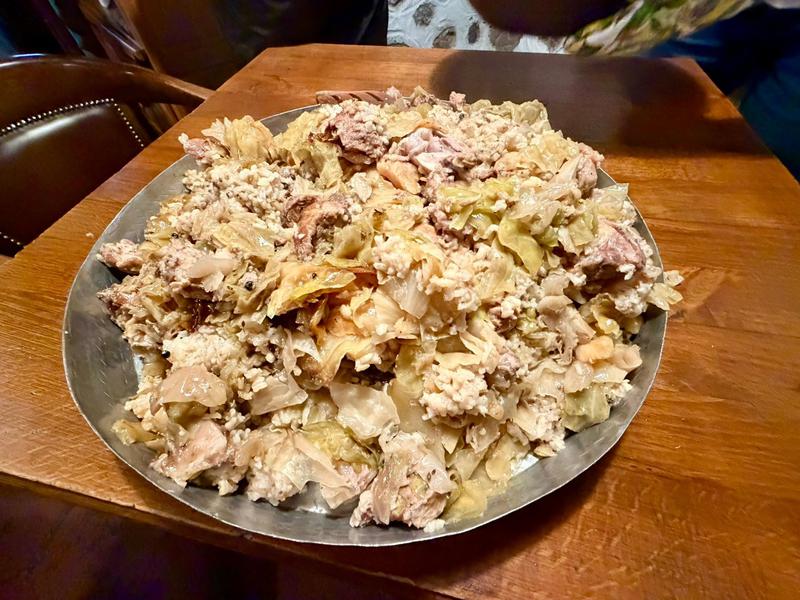 Its distinctive flavour comes from local treasure, chubar, the mountain savory that has become the hallmark of Bansko's cuisine.
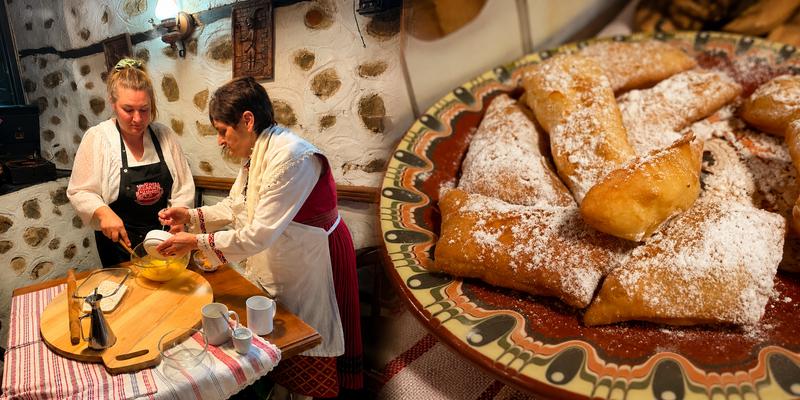 Dessert pastry was prepared right before our eyes, accompanied by Tufahija, another reminder of how different culinary traditions have intertwined in this part of the Balkans for centuries.
The food is complemented by excellent local wines as well as some of Bulgaria's finest labels from different wine regions.
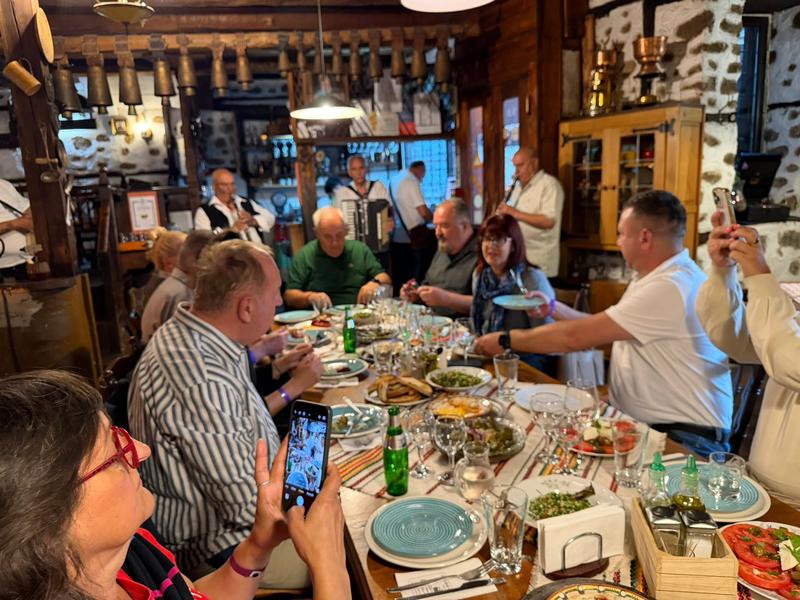 Above the bar hang sixteen interconnected bells. Whenever they ring, everyone knows that someone has something important to announce, to invite the guests to raise a toast, or perhaps to buy a round of drinks for the entire house. In an instant, the distance between strangers disappears, and around the tables emerges what is perhaps Bansko's greatest trademark: a genuine sense of togetherness.
Just a few steps away, beside the Holy Trinity Church, lies Mehana Obetsanova, whose history dates back to 1712.
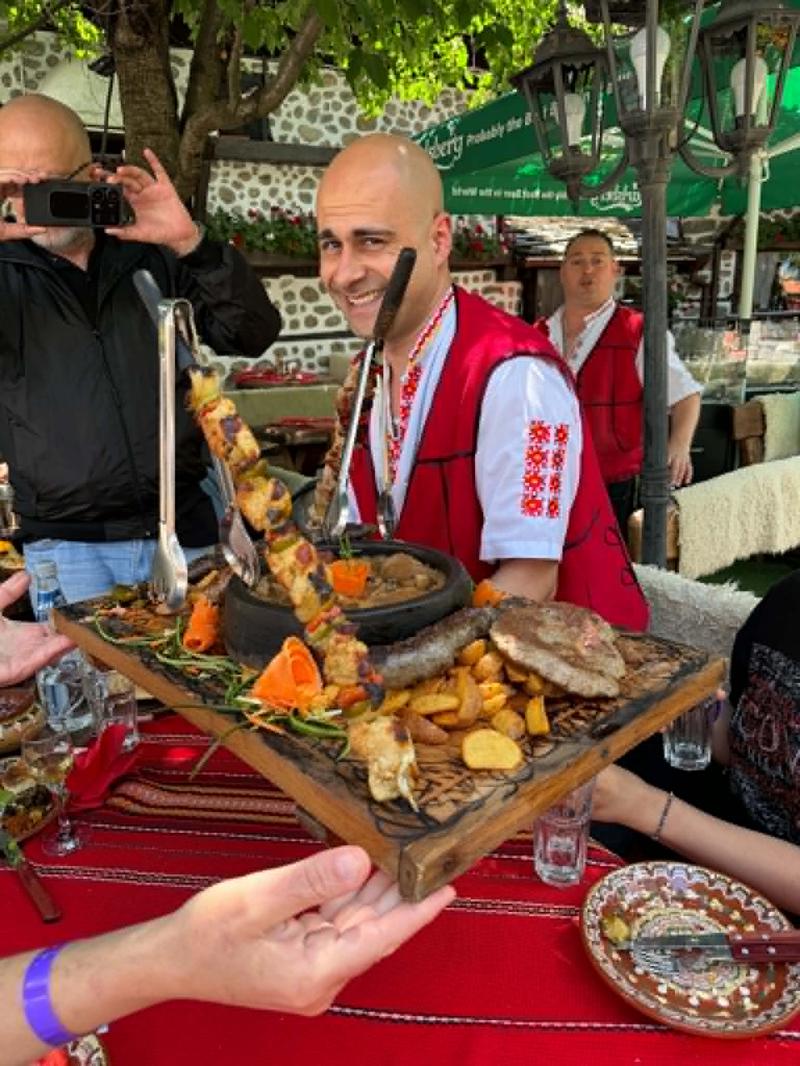 Its tables are set in an enchanting garden filled with greenery, stone pathways and charming traditional details, while waiters dressed in authentic folk costumes complete the atmosphere. Inside, shelves lined with jars of pickled vegetables and other local delicacies, together with handcrafted decorations, create an equally authentic setting.
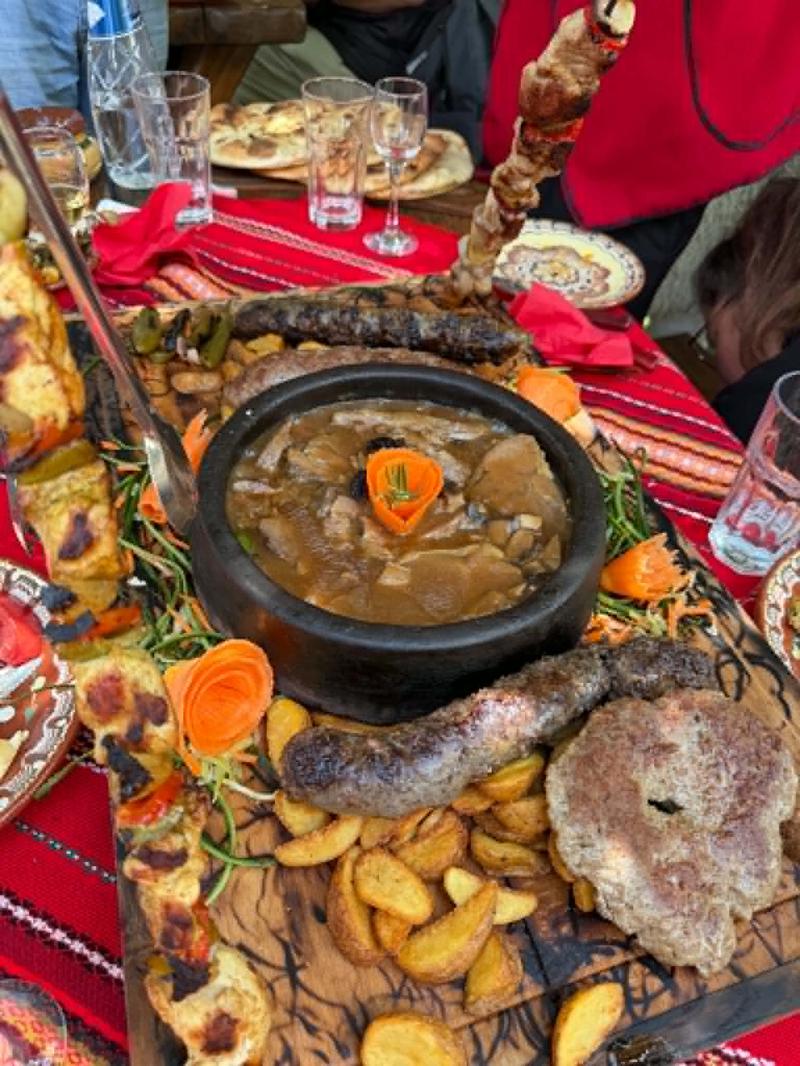 The menu once again features generous meze and spectacular grilled meat platters, but what impressed us most was a rich venison stew served in a large traditional clay pot.
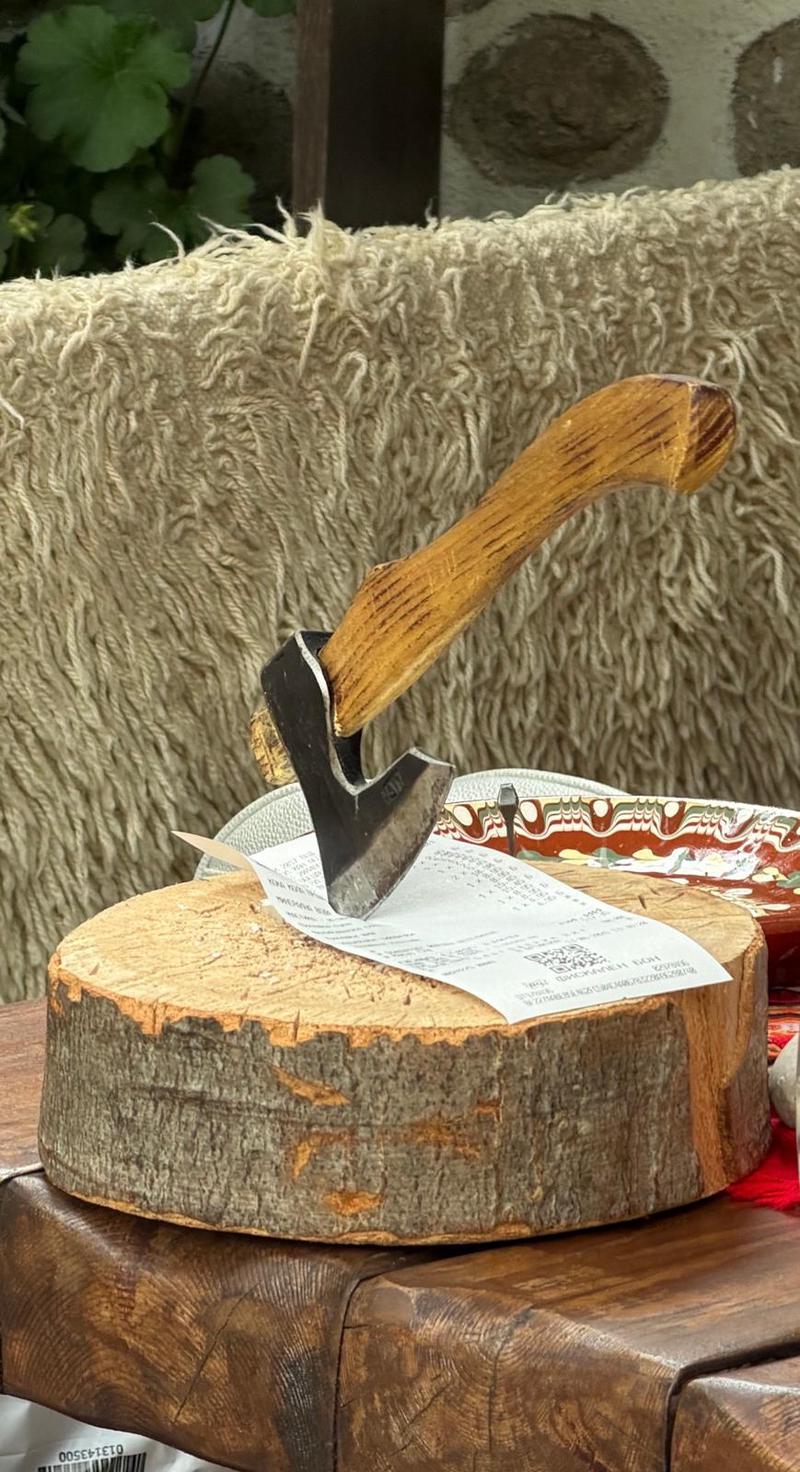 Even the bill arrives with a touch of local character, presented on a small tree stump and secured with an axe.
History Between the Restaurants
 In Bansko's Old Town, traditional weaving and wool spinning are still practised today, proving that the town's heritage is not confined to museums but continues to live on in everyday life. Alongside the Ethnographic Museum, several beautifully preserved historic houses offer visitors a deeper insight into the town's rich past. Among them are the house of Neofit Rilski, one of Bulgaria's most influential educators and reformers, and the Velyanova House, a masterpiece of traditional architecture whose richly painted interiors reflect the prosperity once enjoyed by Bansko's merchants.
The birthplace of Bulgaria's renowned poet and revolutionary Nikola Vaptsarov, whose poetry embraced not only human emotions but also the world of industry and machines, has been transformed into a museum.
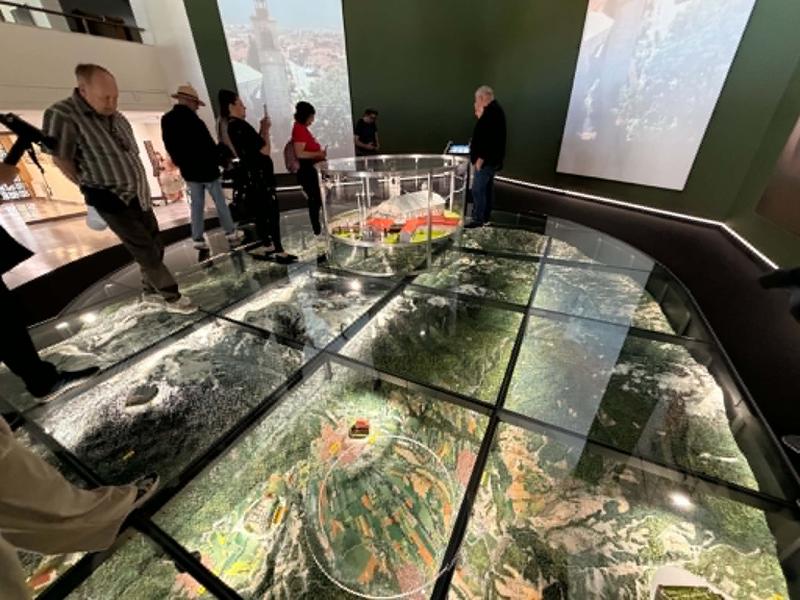 One of its most remarkable features is a three-dimensional relief model of the entire Bansko region, which visitors can literally walk over on a glass platform.
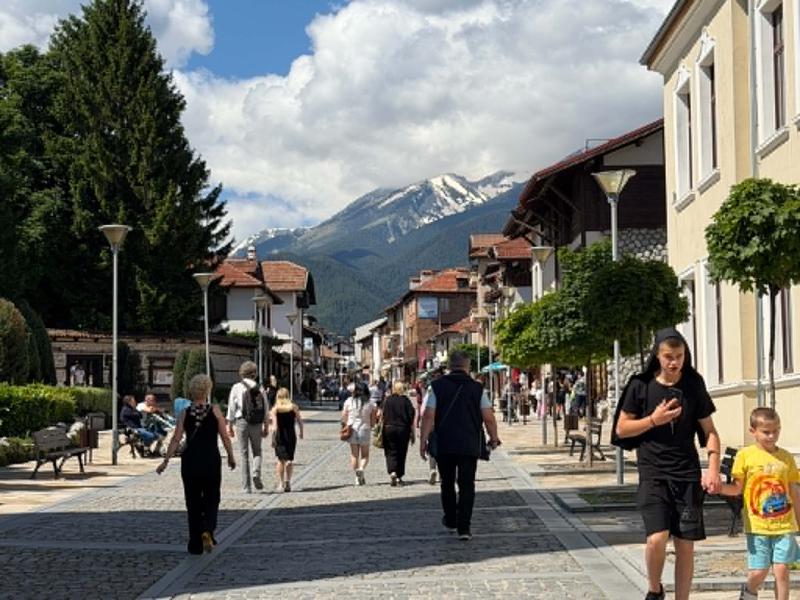 A walk through the Old Town is best concluded along Goce Delchev Street, Bansko's lively pedestrian promenade lined with shops, galleries and cosy cafés, before the aromas drifting from the nearby mehanas tempt you back to the table once again.
Pirin: The Mountain That Nourishes Both Body and Cuisine
After discovering the rich flavours of Bansko, it feels only natural to explore the mountain that has shaped both the town and its cuisine. Pirin National Park, a UNESCO World Heritage Site since 1983, is one of Bulgaria's most valuable natural treasures. Its granite and marble peaks, glacial lakes, ancient forests, and extraordinary biodiversity make it a paradise for hikers, nature lovers and photographers alike.
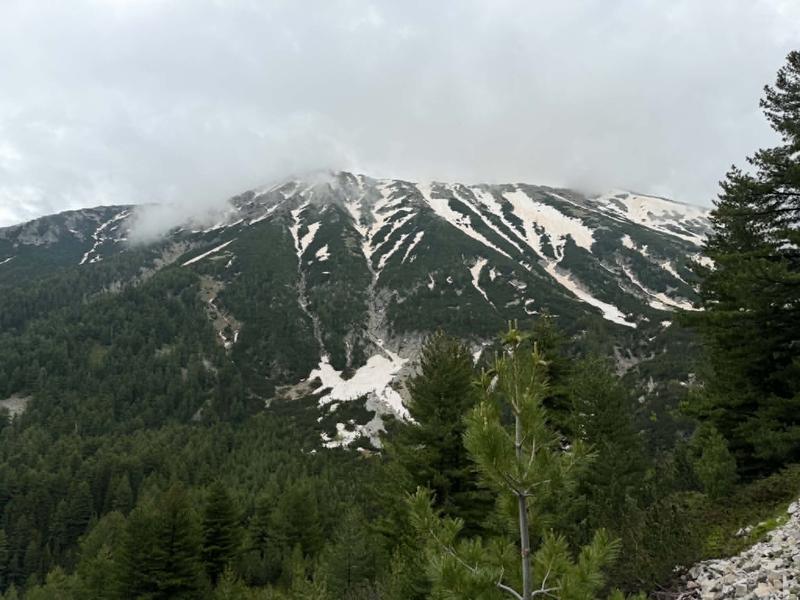
For centuries, these forests have provided game, wild mushrooms, forest berries and aromatic herbs that continue to play an important role in Bansko's cuisine today, demonstrating how deeply nature and gastronomy are intertwined in this region.
Our journey led us towards Vihren Mountain Hut, one of the best-known starting points for exploring Pirin National Park. On the way, it is worth stopping at Baikushev's Pine, one of the oldest trees in Europe. More than 1,300 years old, this remarkable Bosnian pine stands approximately 26 metres high, while its massive trunk measures almost eight metres in circumference.
From there, the road continues to Vihren Hut, situated at an altitude of 1,972 metres, offering spectacular views of Mount Vihren (2,914 m), the highest peak of the Pirin Mountains, the second-highest mountain in Bulgaria and the third-highest peak on the Balkan Peninsula.
A short hiking trail leads from the mountain hut to Lake Okoto ("The Eye"), one of Pirin's many glacial lakes. Crystal-clear water, rocky alpine slopes and mountain peaks where snow lingers long into the warmer months create landscapes that define the timeless beauty of the Pirin Mountains.
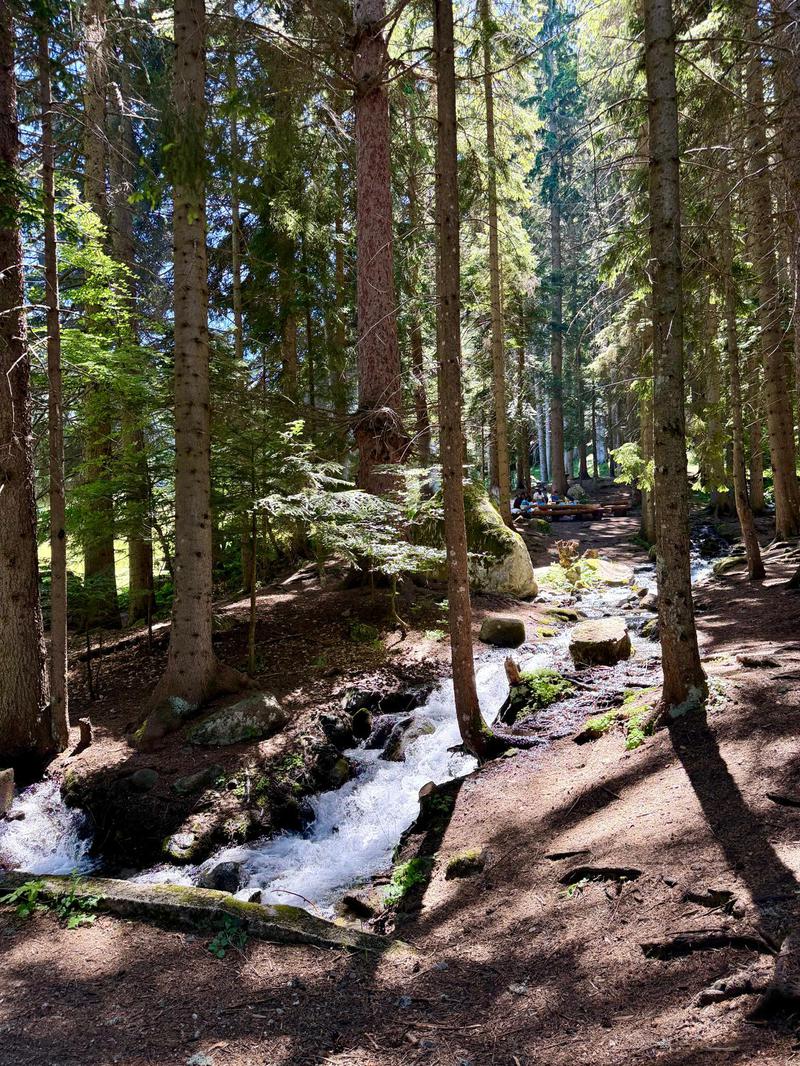
Thermal Springs and Wellness at the Foot of the Pirin Mountains
Over the past few years, Bansko has also established itself as one of Bulgaria's leading wellness destinations. More than seventy natural thermal springs at the foot of the Pirin Mountains provide the perfect way to end an active day, relaxing in warm mineral-rich thermal pools.
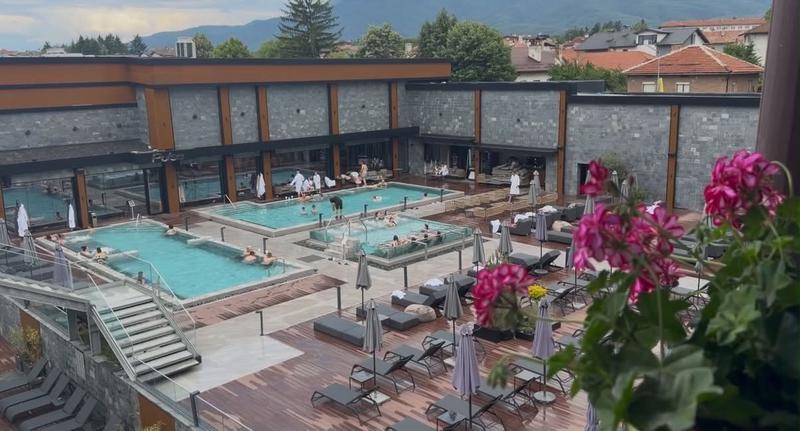 For the ultimate experience, I highly recommend staying at Grand Hotel Bansko, a hotel that beautifully combines the pleasures of fine gastronomy with wellness and relaxation. Its impressive spa and wellness centre covers more than 2,000 square metres, featuring a variety of indoor and outdoor themed pools, saunas, relaxation areas and wellness facilities.
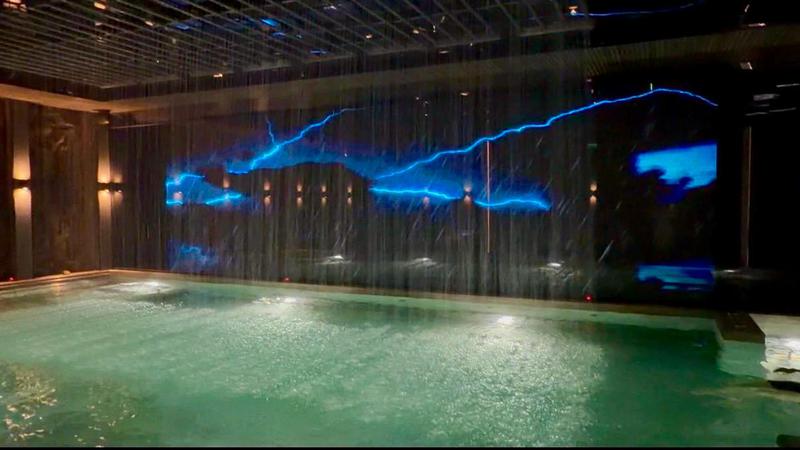
One feature particularly impressed us: a unique pool where a summer storm is recreated through sound effects, rainfall and spectacular lightning projected onto a giant screen stretching along the pool. It is an unexpected yet unforgettable wellness experience.
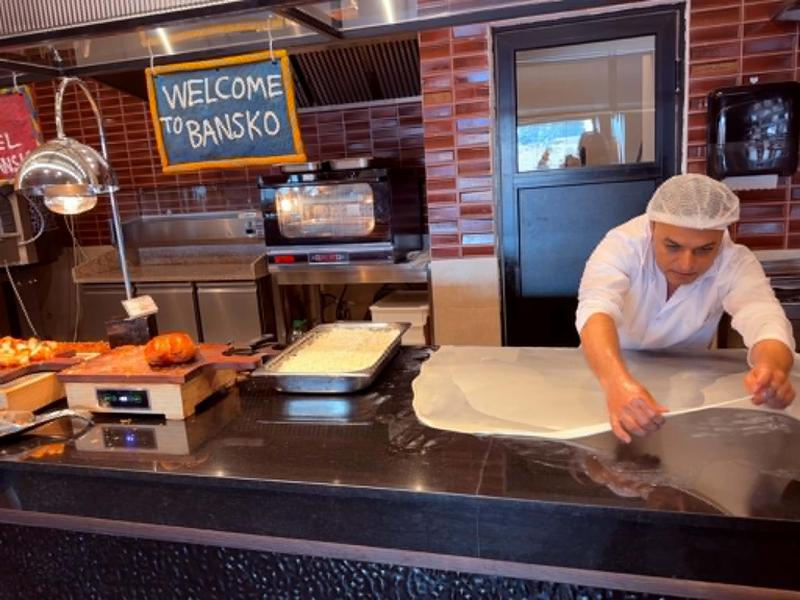 The generous breakfast buffet at Grand Hotel Bansko is an attraction in itself. Guests can watch pastry chefs stretching fresh filo dough for traditional burek, while chefs transform a wide selection of local delicacies into elegant bite-sized culinary creations.
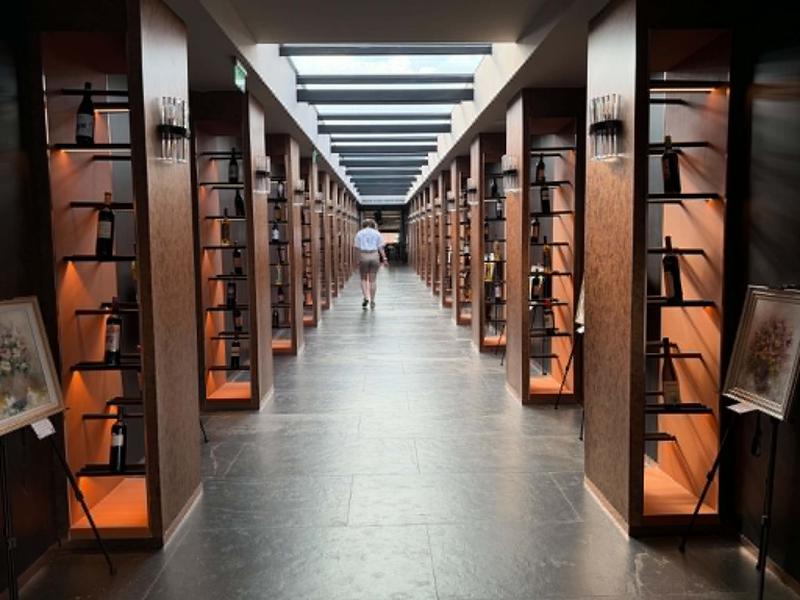 The long corridor leading to the restaurant has itself become a small avenue celebrating the wines of Bulgaria.
For families travelling with children, Grand Hotel Therme offers additional attractions, including a mini zoo, a children's amusement park and an adventure park.
In Conclusion
Today, Bansko is home to around 15,000 residents and offers more than 120 hotels, ranging from luxury accommodation to cosy family-run properties, alongside excellent private apartments, an outstanding restaurant scene, fascinating history and spectacular natural surroundings.
The drive from Zagreb to Bansko takes approximately nine hours, most of it on motorways. A Bulgarian motorway vignette costs around €7 for seven days and can easily be purchased online.
The information for this article was gathered during a press trip organised by the Bansko Tourist Board and the Unique Bansko Association.
My sincere thanks go to the members of the Unique Bansko Association: Yulia Popova, one of the association's founders, who accompanied us throughout the journey; Zorka Tumbakieva, who passionately introduced us to the Unique Bansko project; Blagovestka Goleva, owner of one of Bansko's most beautiful garden mehanas; Malin Bistrin, President of the Bansko Tourism Business Association; and Đorđe Mihajlović, President of FIJET Serbia, whose initiative made this inspiring journey possible.
We returned from Bansko with the feeling that we had discovered a place where nature, gastronomy and hospitality still speak the same language.